
The Department of Applied Mathematics weekly seminar is given by scholars and researchers working in applied mathematics, broadly interpreted.
Title: Bayesian Inversion for Linear Autonomous Dynamical Systems with Application to Real-Time Tsunami Forecasting in Cascadia
Abstract: We present a digital twin (DT) for tsunami early warning in the Cascadia subduction zone (CSZ). This DT assimilates pressure data from seafloor sensors into an acoustic-gravity wave equation model, solves an inverse problem to infer spatiotemporal seafloor deformation, and forward predicts tsunami wave heights. The entire end-to-end data-to-inference-to-prediction computation is carried out in real time through a Bayesian framework that rigorously accounts for uncertainties. Creating such a DT is challenging due to the enormous size and complexity of both the forward and inverse problems. For example, a discretization of the spatiotemporal seafloor velocity in the CSZ – the parameter field to be inferred – gives rise to a system with one billion parameters. Using current methods, computing the posterior mean alone would require more than 50 years on 512 GPUs. We exploit the autonomous structure of the governing equations that results in a time-shift invariance of the parameter-to-observable map, and devise novel parallel algorithms for fast offline-online decomposition. The offline component requires just one adjoint wave propagation per sensor; the PDE solver is implemented with MFEM and exhibits excellent scalability to 43,520 GPUs on LLNL’s El Capitan system. Fast Hessian applications are enabled by an FFT-based algorithm for the resulting block Toeplitz matrices. Using this framework, the Bayesian inverse solution and wave height forecasts are computed in 0.2 seconds, representing a ten-billion-fold speedup over state-of-the-art methods.
Reference: Stefan Henneking, Sreeram Venkat, Veselin Dobrev, John Camier, Tzanio Kolev, Milinda Fernando, Alice-Agnes Gabriel, and Omar Ghattas. 2025. Real-Time Bayesian Inference at Extreme Scale: A Digital Twin for Tsunami Early Warning Applied to the Cascadia Subduction Zone. In Proceedings of the International Conference for High Performance Computing, Networking, Storage and Analysis (SC '25). Association for Computing Machinery, New York, NY, USA, 60–71.
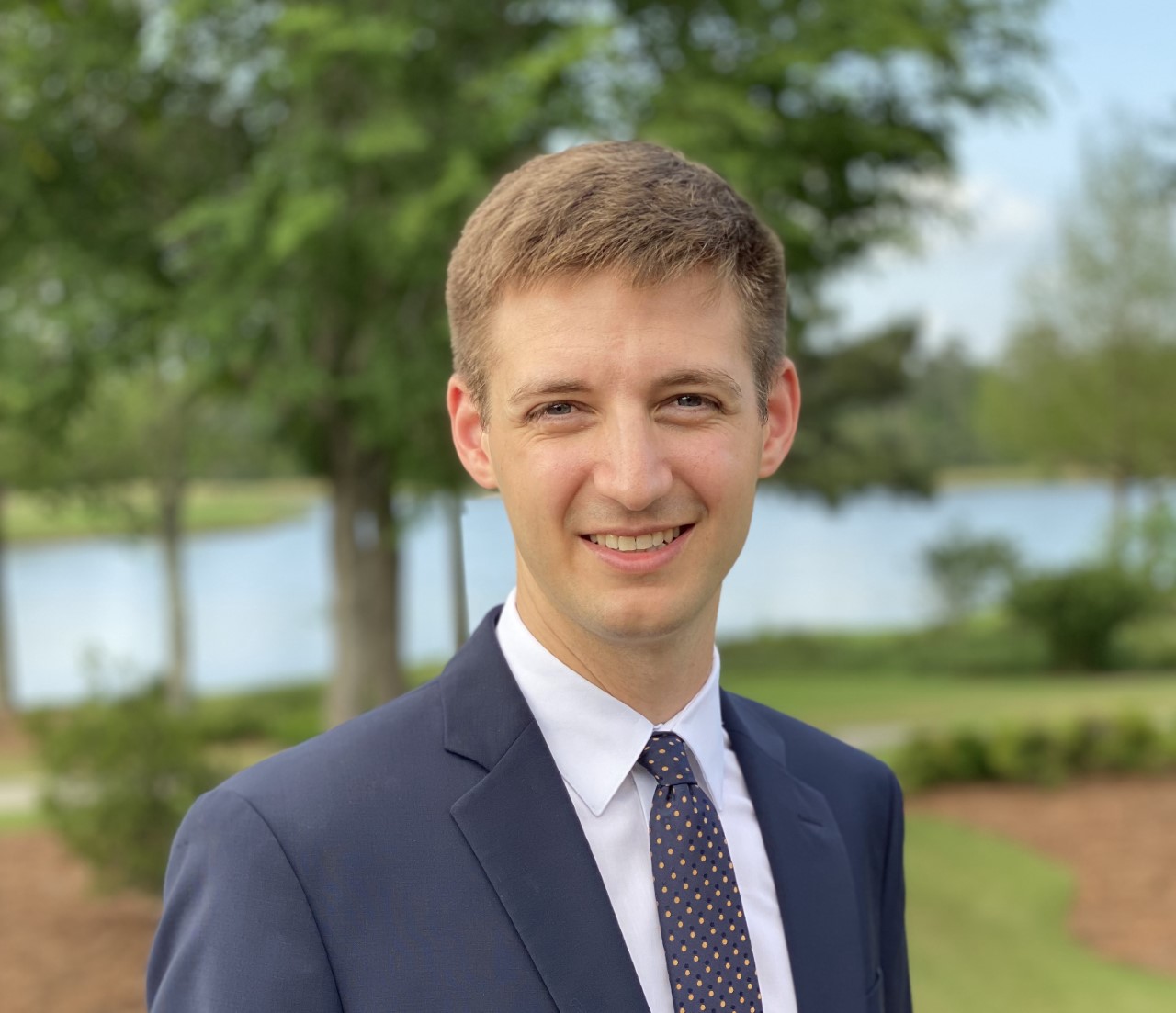
Bio: Stefan Henneking is a Research Associate at the Oden Institute for Computational Engineering and Sciences at The University of Texas at Austin. His research focuses on theory and HPC-enabled computational methods for large-scale Bayesian inversion-based digital twins, with an emphasis on wave propagation problems, including applications in acoustic sensing, fiber optics, and tsunami early warning. He holds a BS (Computational Engineering) degree from FAU Erlangen-Nuremberg, an MS (Computational Science & Engineering) degree from Georgia Tech, and MS and PhD (Computational Science, Engineering, & Mathematics) degrees from UT Austin. He is a recipient of the 2025 ACM Gordon Bell Prize.