

Both Amy Rude and Lila Perkins were awarded the prestigious DOE Fellowship. Congratulations, Lila & Amy!
Amy Rude:
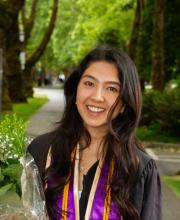
I recently received the Computational Science Graduate Fellowship (CSGF) from the Department of Energy for my proposed research with Dr. Nathan Kutz. With this support, I aim to develop an open-source toolkit for learning low-dimensional dynamical structure in stochastic biological systems using scientific machine learning methods.
Modern experimental techniques in the natural sciences now generate large, multi-scale time-series datasets, where the primary challenge is not data acquisition but extracting useful underlying dynamics. My interest in this problem grew from my undergraduate research experiences working in neurology labs. Although my past research is separate from my current work, they introduced me to the richness of biological systems and the challenges of working with these datasets.
Currently, I am working with Dr. Kutz on using Shallow Recurrent Decoders (SHRED) combined with Sparse Identification of Nonlinear Dynamics (SINDy-SHRED) to learn parameterized governing equations for low-dimensional latent spaces. My work focuses on extending these approaches to multi-scale, noisy datasets in neuroscience and related systems, with the goal of improving both interpretability and generalizability.
Moving forward, I would like to develop an open-source python package with pre-trained scientific ML models to be used in both research and educational settings. This package will incorporate algorithms that limit hyperparameter tuning and shift expensive computation to offline training stages. While the development of these methods and hyperparameter tuning will require substantial computational power, the finalized product will be able to run on laptop-level hardware. Each model will be accompanied with detailed tutorials and benchmark tests, making these methods available to researchers and students without access to HPC resources.
Lila Perkins:
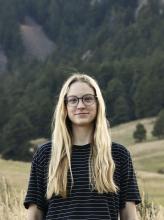
I was awarded a Department of Energy Computational Science Graduate Fellowship with my advisor Professor Baosen Zhang in the Electrical and Computer Engineering department. I am grateful to have received this fellowship to fund my studies. My proposed research focuses on developing scalable optimization methods for scheduling computational workloads across geographically distributed computing infrastructure.
As the demand for compute grows (from AI, scientific computing, industry etc.), so does the energy footprint of computing infrastructure. Smarter scheduling can facilitate more efficient usage of the existing infrastructure, meaning less electricity is used on a day-to-day basis and fewer data centers need to be built. This is a small step towards making large-scale and high-performance computing less harmful to the environment and communities.
The main challenge is formulating and solving large-scale integer optimization problems in real time, for example, allocating compute requests across GPU clusters while also accounting for hardware characteristics and electricity prices by location. I plan to adapt decomposition techniques from power systems unit commitment for this problem.
Prior to UW, I completed two internships at the National Laboratory of the Rockies through the DOE Summer Undergraduate Laboratory Internship (SULI) program, where I worked on mathematical and computational approaches to power grid resilience.
Past award winners include: Cooper Simpson (DOE) & Josephine Noone (NSF) in 2025, James Hazelden (NSF) in 2023, Catherine Johnston (NSF) & Kaitlynn Lilly (NSF) in 2022-2021, Natalie Wellen (NSF), Biraj Pandey (NSF) and Marlin Figgins in 2020, and Robert Baraldi (NSF) & Matthew Farrell (NSF) in 2017.